
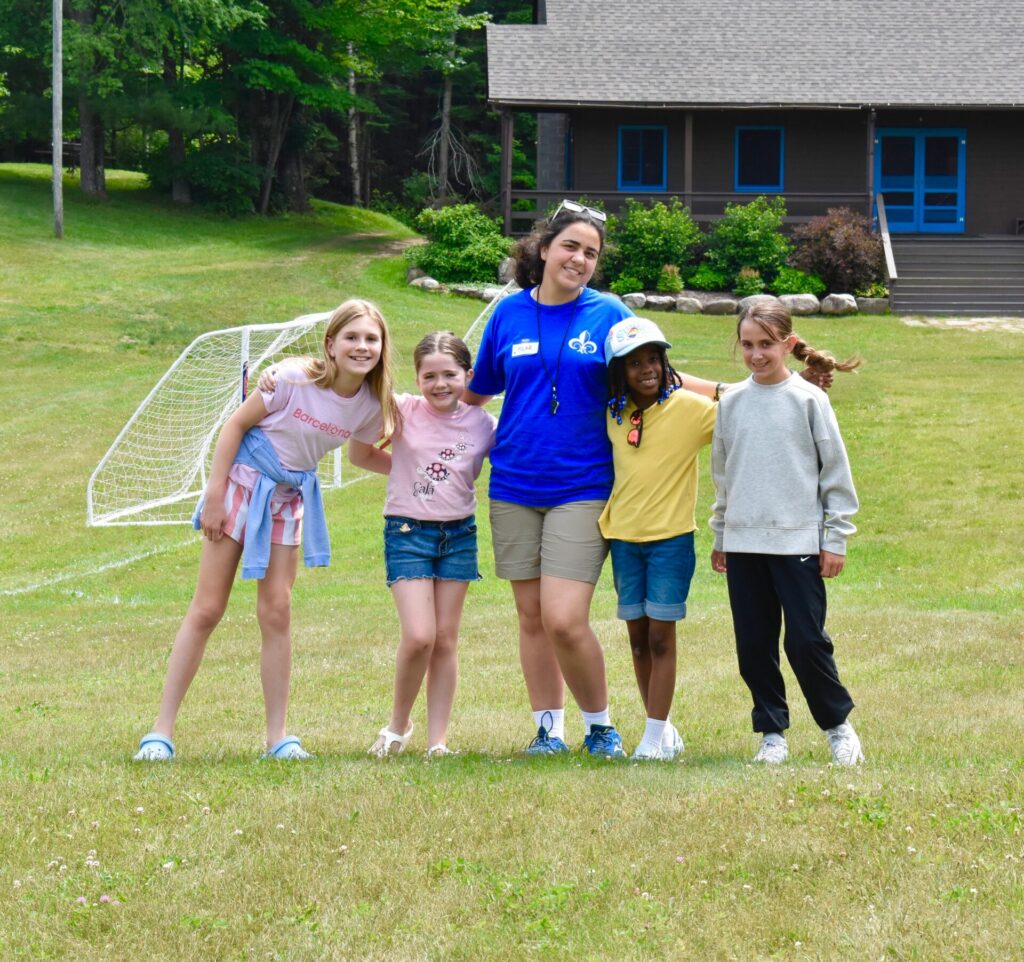
She did fine sleeping over at her cousin’s house. On mornings when there’s no rush, she can get herself ready on her own. She clears her plate, usually after a reminder or two. So how can you really know whether your daughter is ready for overnight camp?
It’s one of the questions we hear most often at Camp Jeanne d’Arc. There’s no single test, but readiness tends to fall into three areas: practical, emotional, and family. Look at all three together, and you’ll have a much clearer answer.
Practical Readiness
Practical readiness covers the everyday tasks a camper needs to keep herself clean, fed, and organized. The good news: almost all of these can be practiced. If your daughter hasn’t mastered every item yet, she has time to work on it before opening day, and counselors can help with reminders and the occasional tricky moment. Still, campers should be able to do these things mostly on their own.
Personal hygiene
- Brush her teeth, morning and night, without being asked
- Shower on her own, including soap, shampoo, conditioner, and rinsing fully
- Brush and style her hair to suit her hair type and needs
- Handle all toileting independently
- Get dressed on her own, including tricky items like a wet swimsuit or lace-up shoes
Meals
- Cut her own food, like pancakes or chicken, and use utensils appropriately
- Help clear plates, silverware, and cups from the table
- Refill her own water bottle throughout the day
Personal belongings
- Put dirty clothes in her laundry bag instead of on the floor
- Keep track of her towels and hang them on the clothesline to dry
- Keep her clothes in her own space, whether that’s a trunk, cubby, or shelf
- Keep her toiletries together in her shower caddy
Try this at home: In the months before camp, pick a week to let her run her own morning and bedtime routines with no reminders. Have her pack her own bag for a weekend trip, then unpack and sort the laundry when she gets home. The tasks she struggles with are your practice list. This will also give her confidence to be ready for overnight camp.
Emotional Readiness
Emotional readiness is harder to measure, but it matters just as much. It means being comfortable away from home, speaking up when something is wrong, and getting along in a shared cabin. Ask yourself these questions:
- Has she slept over somewhere other than a relative’s house? A night at a friend’s home is a good first step. If she’s only stayed with relatives, try a sleepover with a non-family friend before camp.
- Does she have any intense fears? Being a little nervous about the dark, bugs, or putting her face in the water is normal and manageable at camp. A fear big enough to cause real distress is worth talking through with us ahead of time.
- Is she comfortable with a babysitter? If being left with a sitter is still hard for her, practice that first.
- Will she ask for help? At camp, she needs to tell a counselor when something is wrong. A rash or bug bite that goes unmentioned can turn into a bigger problem. Will she speak up if something hurts or she feels stuck?
- Is she ready for community living? Does she pitch in with family chores? Can she lose a board game without a meltdown? Will she share? Cabin life is a group effort, and these everyday habits are good predictors.
A little nervousness is completely normal, and most first-time campers feel some homesickness. What you’re looking for is a child who can feel those things and still keep going, with support from the adults around her.
Family Readiness
Readiness isn’t only about your daughter. It’s also about you. Are you ready for her to go?
At overnight camp, she’ll have more independence than she’s likely had before. She’ll choose what to eat at meals (with counselors keeping an eye out). She’ll decide how to spend free time, work out small disagreements with cabinmates, and try things that are new and a little hard. Along the way, she may write home saying she’s homesick, or that she doesn’t like an activity.
How you respond to those moments shapes how she handles them. A few questions to consider:
- Can you let go of the day-to-day? You won’t know what she ate for lunch or whether she brushed her hair. Can you trust the staff, and her, with those details?
- How will you handle a homesick letter? A sad letter is usually written in a low moment and forgotten by the next activity. Reassure her that you love her and that you’re confident she can do this, rather than promising to come get her.
- Are you projecting your own worries? Kids pick up on our nerves. If you’re anxious, talk it through with another parent or with us, and send her off with a confident goodbye.
- Have you talked openly about camp together? Look at photos, read about the daily schedule, and let her ask questions. Excitement grows when she knows what to expect.
One promise to avoid: “If you don’t like it, I’ll pick you up.” It sounds comforting, but it tells her you’re not sure she can make it, and it makes the first hard night much harder.
Putting It All Together
No child checks every box perfectly, and that’s okay. Most campers arrive with a few skills still in progress, and growing those skills is part of what camp is for. What you want to see is real progress in each of the three areas, and no single concern big enough to make the experience overwhelming.
If you’re still unsure, a few steps can help:
- Practice now. Use the months before camp to build the practical skills and stretch her comfort zone with sleepovers.
- Talk with her. Ask what she’s excited about and what worries her. Her answers will tell you a lot.
- Talk with us. Our team has helped many families through this decision. Share any concerns about fears, health needs, or past experiences, and we’ll talk through how camp can support her.
- Consider a shorter first step. If three weeks feels like a big leap this year, ask us about our 12-day sessions that might make a better first summer.
- Visit us! We welcome prospective families to come to Camp Jeanne d’Arc and see camp buzzing with campers and activities. This will give you a feel as to whether your child is ready.
Sending your daughter to camp is a leap of faith for both of you. When she’s ready, and when you’re ready to let her try, Camp Jeanne d’Arc can give her confidence, friendships, and independence she’ll carry home long after summer ends.
Want more tips? See our Top Ten Things New Campers Need to Know!